How to overcome Imposter Syndrome

If you’ve ever felt inadequate, or like you don’t deserve the good in your life, your job – even when your accomplishments result from your resilience and hard work- read this because I can sense a nod. That sense of phoniness and unworthiness leaves a dent in your self-confidence. And it’s not a feeling that you can easily shake off. I know that only too well.

Feeling like an imposter has got to be one of the worst feelings yet. Even after years of working within the marketing industry, I sometimes find myself questioning my abilities even though I fully know that I shouldn’t.

“I don’t deserve this”
“They’ll find me out”
“I’m not good enough”
“I’m not worthy of my success”
“I’m a fraud”

That’s Imposter Syndrome to you. A belief that you don’t deserve the praise for your accomplishments and fear that you will be found out as a fraud. Is all this normal? Yes. Should we give in to this feeling? A resounding NO. However, it’s easier said than done – although I do have a couple of tips to help you overcome this ugly feeling of unworthiness. Whenever this feeling creeps up, here’s what you CAN do.

  1. Recognise this feeling

    This is the first step and most probably the hardest because we sometimes spiral. Try keeping a journal to record these instances and recognise these moments when you feel like an imposter. And then, let go.
  2. Focus on the facts and challenge negative self-talk

    We can be the harshest critics of ourselves, sometimes unwarranted. Learn to reframe self-negative thoughts to build confidence. How? When you catch yourself thinking along these lines, ask yourself: “What evidence do I have to support this?” Replace these negative thoughts with positive affirmations.
  3. Share your experience

    Find a trusted friend, mentor or support group and share your feelings with them for reassurance. You will be surprised how many of us share the same feelings. This will also help you find new coping strategies and understand how normal it is to experience imposter syndrome.
  4. Embrace growth

    Imposter syndrome can stem from the fear of not knowing enough. Why not set a realistic goal for self-improvement through lifelong learning? It can help alleviate this fear and encourage personal growth.
  5. Celebrate your progress

    Every little milestone is worth celebrating! View challenges as opportunities for growth rather than a fear of inadequacy.

You will meet people who will undermine your work, believe me. And sometimes they do it under the pretense of good intentions. Through the years you will learn to filter, pick, and choose your support network. And even then you will still cross paths with people who do not wish you the best (to put it mildly).

Most of us have been there. I still find myself overthinking things and wondering whether I’m good enough for the job. I’m being totally honest with you now. It wouldn’t be the first time I get a request for a big project and question whether I can pull it off. In the end, I dive in head first and challenge myself even if it’s something out of my comfort zone. It’s how I manage to outgrow it. And you will get there by being patient with yourself and believing you can. Because you’re amazing and you can.

There’s also this. Self-employed people, running their own businesses, face a set of different challenges. How many times has someone put a price on your work, remarked that your work is expensive or pointed out that someone else can do the ‘same’ job for less? My advice? Move on. Do not take them on as clients because they are clearly NOT your target market. Let. Them. Go.

Never second guess your capabilities, and especially your worth. If you’ve done your research, you have the experience, the knowledge, and the know-how, do not let others dictate your worth. That’s unprofessional, unfair, and uncalled for.

Scenario. I drop a baker a message to order a cake. If say the cake is not within my budget, I thank them and move on. Wouldn’t it be rude to message back ‘Hmm, but I think your cake is expensive and you should charge me less. It’s just batter and a little icing.’ That would put you on their good list. If it’s just batter and a little icing, why not do it yourself then?

Same with the service industry. Rethink your audience & market – if you’re getting these kinds of messages over and over though, perhaps it’s time to shake things up a bit. Re-evaluate your goals, and the ideal client that you wish to have – and work towards that. But that’s another story for another day!

Back to overcoming imposter syndrome. It’s not easy but you can wave goodbye to that nasty self-doubt holding you back. Acknowledge imposter feelings, reframe negative thoughts, celebrate your achievements, share your experience, and embrace lifelong learning. One thing you should remember? You are not alone.

Be proud of who you are and how far you’ve come.

Until next time,
Amanda x

Reality of Working from Home as a Self-Employed Mum | Tips & Challenges

WHAT TO EXPECT | This blog is about the reality of working from home as a self-employed mum with little kids. No sugar coating!

I wrote about my expectations of handling work with a young one and a baby on the way. And now that I have delivered said baby, I can share how it’s really going so far. With one kid, it’s something. With two, it’s something else.

So work from home has become somewhat of a buzzword after 2020, right? And although some businesses are bringing everyone back to the office, other companies have embraced remote working and made it part of their strategy. And then there’s self-employment, a different world entirely.

But in both cases, the boundary between work and personal life can blur when you work from home. In my case, it’s almost inevitable – and not something I am particularly happy about because finding the right balance and FLOW is everything for my peace of mind. When I start working and stop in the middle of something, start and stop again – all morning and into the afternoon – it doesn’t get me anywhere. So first thing in the morning, or late at night, I write a doable list of priority items for the day ahead. It helps break work into manageable and attainable ‘smaller pieces’ which I can tackle throughout the day and try my best to stick to.

How can you work from home with less hiccups? (Because let’s face it, you can’t dodge them all).

I love a good, organised schedule and designated work space. Having my little corner office to work from helps me focus on the tasks. It’s like having a ‘home-free’ work area that gets me in the zone with fewer distractions (or so I hope every time I sit at my desk). To FOCUS. Lately, this has been quite a challenge with a baby. Even as I write this, I am sitting on my unmade bed after managing to get little Chloe to sleep in her crib – so the irony is not lost on me. I don’t like having my laptop in the bedroom but these days require that I do if I want to get some work done. And a schedule? With two kids, I try – honestly, I do – but my schedule is to work around naps, feeds, and playtime. Most days I’m in the right mind zone, I’m motivated to do the work, inspired even – BUT not able to actually and productively get things done -which is super frustrating. And that is the reality of it. On good days, I work through the whole list whilst mummying, on other days – I barely manage to send out one simple email.

Multi-tasking – the best thing you can do is to avoid it. You might feel like accomplishing a lot but I have learned that single-tasking is a much healthier option because you do get things done, one after the other – without a headache and scattered thoughts. Even if it’s not the easiest thing to do, when you work from home, start by blocking some major time-wasters out – namely your phone and social media accounts. Push back any household chores (that laundry basket begging to be emptied, a speck of dust that has been nagging you or a quick trip to the store) and anything that comes in between you and your paid work.

I’m not saying you don’t schedule them in your day. But that’s just it – schedule and organise your work day first and then work around it. For instance, you can work all morning, take a break, do the laundry, and get back at your desk later (if the nature of your work permits it).

Now, if you’re a parent (of small kids especially), you know all too well that parenthood is a full-time job and then some. The early years are the toughest because the kids cling to you every waking second. It’s a beautiful thing having little people running around the house and looking up to you. But to have a household to run, we ordinary people need to make a living. And if you work from home that means you need to find a way to take care of the kids and work at the same time. Which is, let me tell you, such a challenge. My 5-year-old has become a lot more independent lately. She’s thankfully easily entertained with drawing, painting, and making crafts. Before Chloe, I tried scheduling in a couple of hours before the world (and Bethany) woke up. But this is close to impossible in the newborn phase (at least in my case). Instead, I squeeze the life out of every minute of sleep I can get to be able to function properly. Parents of babies know all to well well that sleep is too little and never enough.

I’m self-employed, and have a five-year-old and a five-month baby. So here are a couple of things that help me get through the day without going haywire:

  • Accept help in any form – it can come in the form of meals, babysitting, household chores or grocery shopping.
  • Set realistic goals – know your limit, learn to say no, and set achievable goals for each day.
  • Outsource work –when you can: delegate tasks you can outsource because this frees up your time.
  • Good communication – with your partner: this is key.
  • Childcare services – are always an option: even a few hours of childcare support can make a significant difference – and try not to feel guilty about it.
  • Create a schedule – create a priority list for each day and block time for work to avoid feeling overwhelmed by your workload.
  • Practice self-care – we are not superhuman and burning out is real. So make time for self-care activities like exercise, meditation, or hobbies that help you relax and recharge.

Like everything else in life, self-employment comes with its set of challenges. Having no maternity leave was the hardest honestly. Not being able to stop working and fully enjoying the little ones for the first few months was tough. So if you’re thinking about venturing out on your own, you need to look beyond flexibility.

The ability to work from home offers unique opportunities and challenges. On one hand, you’re flexible to set your own schedule and be present for your children’s important moments. On the other hand, finding the time and energy to grow your business while caring for your family can sometimes feel overwhelming. And I get it. My partner (who works full-time at an office) and I are still figuring out the best way to go about work, household chores and raising two kids. So even as I write this, I’m certain that things will change yet again in a month’s time.

Are you a WFH parent? Do you run your own business? How do YOU manage the time? What are some tips you can share with us? I’d love to hear from you!

Until next time
Amanda x

↠ MORE ON THIS! I’m sharing my self-employed journey on Instagram and show what I find most helpful over there. Feel free to follow for tips & updates!

Raising kids, building a business.

A guide to (try &) master work-from-home success

WHAT TO EXPECT | If you’re self-employed, a freelancer, a small business owner, and a parent who works (mostly) from home, this guide will help you navigate work and family life.

“How will you manage with two kids?” I wish I had a euro for every time someone asked me that – I wouldn’t have to work another day in my life! I swear, once the other person spots my growing belly (which is hard to miss at this stage really), and knows that I’m a self-employed working mum, it’s the first thing that pops out – after the obligatory congratulations. I have already written about juggling WFH and motherhood earlier this year – let’s go through a couple more things I learned along the way.

So, yes. How will I manage work and two kids? When I started back in 2017 with just Nina my dog following me around, I thought it was hard. Which mind you, it was – starting my business from scratch was anything but easy. But then again, it’s what makes all the hard work worthwhile and I wouldn’t change a single thing.

But then, two years later, little Bethany dropped into our world and things changed. Completely. If you run your own small business, you probably know how difficult it is to even take a day off. The minute my water broke, I remember sitting back down (after a quick shower and whatsapping my husband that it was finally happening) to tie loose ends, message clients, and make sure everything was in order before I left for the hospital. After that, it was quite the challenge to reschedule my work around her sleeping and feeding times when I was running on 3-hour naps (I remember the sleepless nights all too well). But with the great help of my family, and the below tips I pulled through. That’s why I created this little guide.

Having a second child changes things yet again. So, back to the writing board.

The first few months are tough – so let’s be realistic. Setting clear boundaries to work towards a more structured routine can be nearly impossible sometimes. One thing that will help you focus on the task at hand is to have a dedicated work area where you can mentally separate work from home, free from distractions. Again, it will take time to adjust and you will end up working on your laptop while feeding or cradling the baby. Distractions are everywhere with kids in the same building. But do create your space and work from there when you can.

Focus on what’s important and prioritize tasks based on deadlines and importance: both for work and home. It’s better to have a manageable to-do list with fewer tasks and get them all out of the way than to create an unachievable list that goes on forever. Allocating your time (and energy) wisely is key to feeling a sense of accomplishment and avoiding feeling overwhelmed.

At a certain point, I realised that I couldn’t do it alone. I accepted that I need help to focus on the things that I excel in and delegate other tasks (e.g. admin, accounts) to a trusted person. The same goes for housework chores and childcare. It’s impossible (and ultimately, shouldn’t be the case) to take everything upon yourself. Delegating certain tasks will free up your time and reduce the stress of trying to do everything yourself.

If you’re self-employed or work freelance, you do not have a boss, and your work schedule is more flexible. But you do have clients/customers and you do have deadlines. So unlike what some people think, it’s not all unicorns and rainbows. But what you can do is embrace that flexibility and learn to work it in your favour. If you run your own business you already know that sometimes, you have to skip weekends and also, work weird ungodly hours to get things done. Being a working parent, you also need to work early mornings, during naptimes, or at night – and adjust your work and home life as you go along.

But also, don’t push it. I know how it feels when someone tells you to rest when the baby sleeps. When will the work get done then? At the same time it’s important to try and find a balance – burning out is the last thing your body and mind need.

How to overcome common obstacles & stay motivated

Your coffee will get cold. That, I promise. And you will forget about your mid-day snack or lunch – or both, every once in a while. But never forget about taking care of yourself. That is non-negotiable and essential to maintain the focus and energy you need as a parent and for your career. So yes, if you have the chance to head out on your own and grab a coffee – do it. Get out of the house, change scenery, and do something you love. Read, draw, go for a run, meditate – whatever helps you relax and recharge.

So back to the question, “How will you manage?” I usually reply with: “Somehow, I will.” And so will you. Being your own boss and being a parent are both learning curves. I’m sure you’re doing an incredible job so be kind to yourself.

Let’s recap:

  1. Always accept help (from trusted people)
  2. Learn to prioritize and delegate
  3. Take real breaks (taking a shower DOES NOT COUNT)
  4. Don’t be too hard on yourself

↠ MORE ON THIS! I’m sharing my self-employed journey on Instagram and will be showing what I find most helpful over there. Feel free to follow for tips & updates!

Thinking of taking the leap? Let’s get you started! Here are 5 things I wish someone told me before becoming self-employed!

Until next time
Amanda x

5 things I wish someone told me before becoming self-employed.

As a freelancer, a small business owner, or someone who is self-employed, you will wear multiple hats and take on different roles. More so at the start of your journey. You’re providing a service or selling a product but you’re also running your business. How can you do all that effectively?

WHAT TO EXPECT | If you’re considering self-employment, in this post I will uncover the 5 things I wish someone told me before starting my own business.

After leaving my 9 to 5 job, I turned down full-time job opportunities to embark on my self-employment journey. To date, I still turn down exciting roles. The thing is, after having a taste of self-employment, I would not hesitate to do it all over again – even with all the struggles and setbacks.

However, I wish I had a mentor when deciding on giving self-employment a go. I wish there was someone who I could rely on, someone who went through the things that awaited me and guided me through them. I made my way into the self-employed world on my own, knowing absolutely nothing about what it means to work solo and only learned through trial and error. So this is me sharing the 5 things I wish someone told me before becoming self-employed.

1. Plan for financial stability

Being self-employed = having a fluctuating income. Or at least until you manage to bag a couple of retainers. During the first year, you will be forking out money until you get started. So instead of diving into self-employment head first, make sure you have a financial safety net in place. Have a plan B, C, and D just in case.

If you’re providing a service, make sure you have an agreement in place, and don’t be afraid to ask for a deposit. There will be instances where you will have to chase clients to settle the bill for work that you’ve already done. Been there, I’m afraid.

You’ll also need to get ready to handle administrative tasks that might have been alien to you in your previous job. Invoicing, bookkeeping, managing, and financing your business. The best gift you can give yourself is that of orderliness and being organised. So make sure to:

  • Track your expenses
  • Save up
  • Budget
  • Create an emergency fund to cover surprise expenses
  • Set aside money (in a separate account if need be) for taxes, SSC & Vat contributions

Which brings me to the next one.

2. Understand taxes

The biggest headache of them all. Taxes, Social Security Contributions, and VAT. I can feel my head throb by just mentioning them. But it’s important to understand and keep track of your incomings and goings. For a long time, I winged it on my own using accounting software (which I still use for some things) to track expenses, issue invoices, and all that jazz. More about this here.

I’m quite organised (as you need to be). I keep copies of every single document, invoice, and receipt, digitize them, and save them in their respective folders. When I was just starting out, I was trying to cut costs so I took care of everything myself. But honestly, hiring an accountant was one of the best decisions I’ve ever made. All those anxiety-filled hours I wasted trying to understand and fill in tax forms are now spent doing something productive. Looking back, I would have hired a trusted accountant right from the start.

GEMMA regularly holds free training sessions by industry professionals – so be on the lookout! They also have a handy guidebook on self-employment.

3. Build a strong support network

Connect with like-minded people from your industry. Bounce ideas. Don’t be afraid to collaborate with other freelancers and self-employed individuals because sometimes, working on your own can be quite isolating. I didn’t dive into the networking game in the first year because I was still trying to find my footing. But building connections on socials can be a great thing. Joining groups and communities can also do wonders (1.) to build a network and relationships and (2.) to connect with potential clients. Don’t be afraid to step outside of your comfort zone. It might not feel good at first – with all of the newness and uncertainties that come with taking the leap – but I promise, it will be worth your while in the long run.

4. Set boundaries

When you’re self-employed, the boundaries between work and your personal life tend to blur. There will be days when it gets overwhelming and not just during the first couple of months. Years in, I still get days where I find myself spritzing calming spray in an effort to keep stress at bay. It doesn’t always work, mind you. The trick is to not let it get to that point and escalate. I find it absolutely important to set boundaries and know your limit to prevent burnout and create a healthy life-work balance.

  • Take frequent breaks
  • Set working hours
  • Change scenery
  • Get out of the house & go for a walk
  • Learn to priortise tasks
  • Create a schedule to keep you on track

I have also learned to say ‘no’ when my current workload reaches its capacity. Or when a project is not the best fit for me. There’s no need to be afraid of declining work as long as you do it gracefully and respectfully. When or if the time comes, outsource, delegate, and grow your team. You don’t have to do everything at once or everything by yourself. But take it a step at a time.

So yes, your well-being comes first.

5. Self-Care is a priority

Funny thing when you’re your own boss, no one will think you’re ever busy. What people don’t realise when they see you at a coffee shop at 10 am on a weekday, is that you also work through weekends, and public holidays, wake up early or stay in late to meet deadlines and make ends meet.

During a real conversation I had with an acquaintance a few weeks ago, self-employment made it into the stream. The first thing this person said?

“Being your own boss. I envy your flexibility. You can just take the day off.”

Um, no. Not really. True, flexibility is a big pro which I love but we also work around the clock to make it work. It’s like any other job but with your business directly at stake. It can be demanding and it can be stressful. So it’s SUPER important to go and have that coffee by yourself or with a friend at 10am on a Tuesday. Make time for a walk, relax, spend quality time with your loved ones, and enjoy your hobbies. Whatever helps you unwind and take better care of yourself, do it. Schedule it like you do work. Because if you’re not at your best, if you’re not feeling your best, you can’t give your absolute best.

And there you have it. The first 5 things I would have told myself six years ago when I was just starting out!

↠ MORE ON THIS! I’m sharing my self-employed journey on Instagram and will be showing what I find most helpful over there. Feel free to follow for tips & updates!

Self-Employed? Let’s get you organised! Tools that will help you stay on top of your game right here.

Until next time
Amanda x

Hello Emily! What’s cooking?

For my next interview, I set my mind on getting to know another self-employed local who runs her small business. I wanted to listen to her story: how it started, what inspires her, and what really goes on behind what you see on socials. So I was looking for someone who started her business from the ground up.

Emily quickly came to mind. I’ve been following Emily on Instagram for a while and was instantly hooked when I saw her tasty creations. She’s the local queen of pies. So funny story – turns out, she lives right around the corner from my place. So instead of having an online call or just sending off my questions, we met at a local coffee shop some 5 minutes walk away.

We got sidetracked a bazillion times BUT we finally got down to it. First, let’s get to know Emily a little more.

Who is Emily?

E: I run a small catering business. I have a 9-year-old son, Oliver. In my free time, I love to read and travel. I love to cook and eat – but I think that’s pretty standard haha! I’ve been working in the catering industry since I was 14 – a family friend of ours had a snack bar and on weekends and during the holidays, I used to help them out. I have nice, fond memories of that time and I remember her telling me: “If you want to be a chef you have to learn how to dice an onion properly.” That’s still etched in my mind!

I continued my studies at ITS and also lived in the UK for quite a while and worked at a couple different places. One of which was Gordon Ramsey’s restaurants there – which BTW was one of the worst experiences of my life. I then moved on to work as a Chef de Partie at an AA Rosette restaurant, and I loved it. Spent two years there before moving back to Malta.

What inspired you to start your own business?

E: By a lot of things! Although I love the catering industry, I decided that with a kid I didn’t want to be working weekends, holidays etc. So when Oliver was young, I studied finance and took on a 9 to 5 job within the financial industry. I enjoyed certain elements of it – I loved the stability and needed to have structure at the time. But I always knew that that was not what I wanted to do for the rest of my life. Fast forward eight years in mid-Covid, I decided to take the plunge. It was a long time coming as I wanted to have a safety net of savings – this wasn’t a quick decision, I needed to feel prepared. And if anything, working in the financial sector taught me about planning, strategy, and how to take care of and grow my money. So I gave in my notice and January 2022 was my official start to self-employment. It was nuts!

Eats by Emily

Walk us through the food/cuisine that you specialise in?

E: This is a tough one. I think I’m still discovering this. Before, when I worked in catering I used to specialize in pastry – fine dining desserts and sweets. However, when I started my own thing. I wanted to branch out. So now, I love to prepare healthy, seasonal, and interesting meals. I also love pies and making not-so-popular pies. When I started making the pumpkin pie, I feel like no one in Malta had trialed this out. And after the third year, I have people who keep coming back for it. But right now I’m enjoying the process of experimenting, flavour matching, and learning new things.

How do you manage your time effectively as a self-employed chef?

E: I don’t haha. I have good weeks and ‘bad’ weeks. So ‘bad’ weeks are when I need to be cooking in the kitchen every single day. I say ‘bad’ – it’s very good for business but it’s not good for me to be in the right mindset. A good week is when I have a Mon-Wed-Fri cooking schedule and do admin, creating content, researching, and planning in between. My work is very seasonal. I would have non-stop months and other weeks where I can plan ahead for those busy months. This is something I’m learning now – that I need to plan for the following months during my less busy periods when I’m not in the kitchen. And, I try as much as I can, to take the weekend off – not always possible. I know this may sound cheesy, but ever since I started working for myself, I have never had a single Sunday evening blues and that is such a big relief for me. Sunday afternoon comes and I realise that I’m actually looking forward to Monday. Mind you, I don’t always wake up chirpy and whatever. But I had moments before in my other job where I was depressed in the mornings, not wanting to go to work. So I’m really grateful for that.

What are your future goals for your business & how are you planning on achieving them?

E: I love this! Immediate future goals are: finish the kitchen and move in! Also, this year I would love to officially launch a consistent meal plan service and eventually hire an employee. It’s not sustainable working 16 hours a day so I’m looking forward to all of this. Those are my goals for this year.

I know you’re just starting out yourself but what is one piece of advice you would give to someone who’s thinking of switching to self-employment?

E: A couple of things.

  1. It is not as glamorous as people make it out to be. It takes a lot of hard work and hours. It’s not this easy simple life some people think it to be.
  2. Take a leap of faith but it has to be calculated. It needs to be logical and makes sense financially. So have a business plan and run it by someone who understands. “If it’s meant to be, it will be” is not enough to leave a stable full time job.
  3. Have a safety net. Whether it’s working a couple of years to have an emergency fund, or discussing with your partner – whatever works for you, have that. There are going to be months were you’ll be in the red – a client leaves unexpectedly or because you’re not paid yet. It might mean skipping lavish holidays for a couple of years. You’re going to make sacrifices but I think that if you’re doing something you love, it’s a sacrifice that you’re willing to make.

Hey, is anything exciting happening for Mother’s Day?

E: I’m trialing some stuff for Mother’s Day. I have something in mind that it either works brilliantly or it won’t work at all! But I have this cute idea – I won’t say anything for now but will keep you updated!

QUICK questions with Emily

Sweet or savoury?
Sweet! I have the sweetest tooth!

Tea or Coffee?
Coffee

Favourite film?
To be fair I’m not so much a film person. I always fall asleep during films so I don’t get to the end of them.

Early bird or night owl?
Early bird for sure. I wake up at 5am and after 8pm I don’t function.

One thing you would like to cross off your bucket list?
OMG, I have so many. How am I going to choose one? Top three?
1. Visit Mexico
2. Adopt a senior dog
3. I honestly want to travel – a lot

Loved our chat Em & look forward to our next coffee date!

Go Follow!

Till next time,
Amanda x

Self-Employed? Get Organised.

I’m writing this five years after landing my first client. If you’re just starting on your own or thinking about it, I know how overwhelming it can get. At this point, being organised is the best gift you can give yourself.

WHAT TO EXPECT | In this post, I will not go into branding and content creation. This is the backend of the backend and these are tools that will help you stay on top of your game.

✨ DESK SPACE

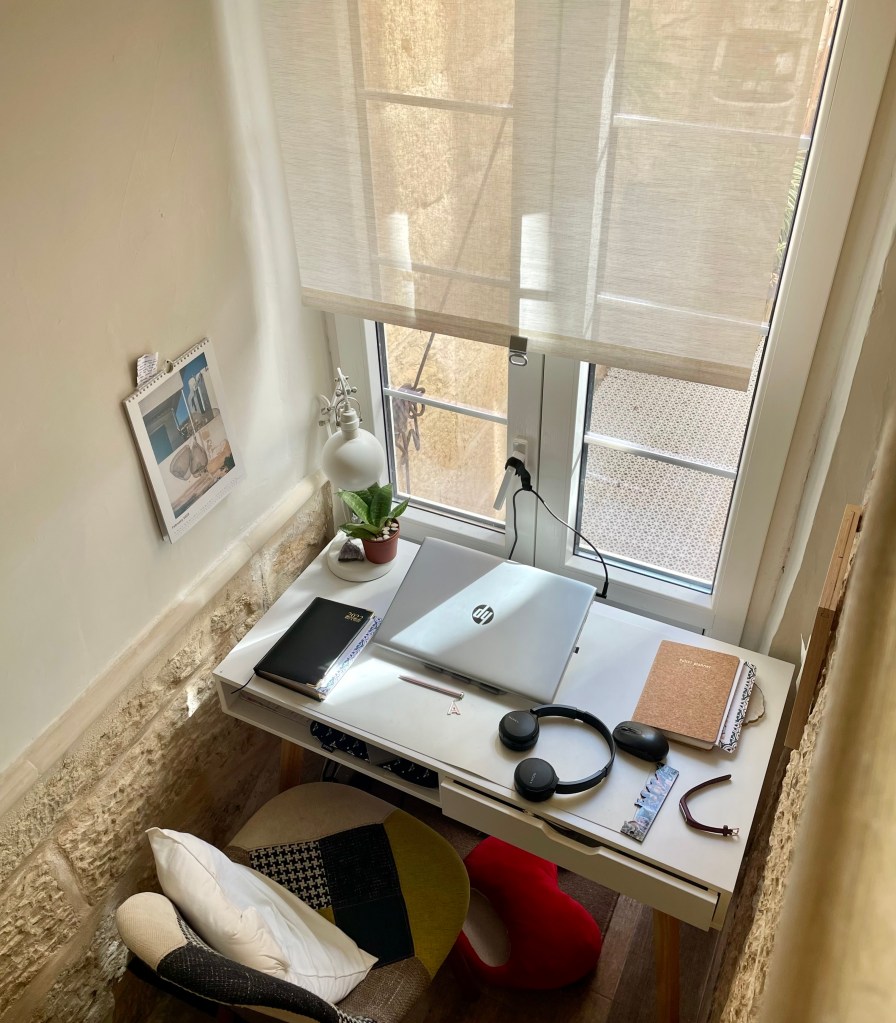
My first ‘office space’ was not an office at all. I have been working from home way before COVID-19 hit us like a storm. I used to work from the couch, at the dining table, from cafés – you name it. One thing I learned along the way is that it’s better to have a space dedicated to your work. Even if it’s just a small desk (I managed to fit one under the stairs) and a shelving system for files, paperwork, and books. I want work-related stuff to be at arm’s length – literally.

Mind you, I still go to cafés to work. It’s usually more to brainstorm on personal content ideas, find inspiration and write – rather than client work. But I find the change in scenery to be refreshing. Sometimes, much needed.

Stationery Essentials:

Planner/Yearly diary – the physical kind to complement your online calendar. It will keep you more accountable and it feels good to tick or cross out tasks.

Highlighting System – colour-coding your work schedule so that you don’t overlook anything.

Sticky Notes (and a memo board) – perfect to pin ideas that pop out of the blues, scribbles, reminders & quick notes.

List Pad – I promise you, you will thank me later.

Filing System – We live in the digital age but you will still have papers to sort out and file. Especially (and I cannot stress this enough) for your VAT, TAX, and Social Security Contribution.

I have separate, transparent folders – labeled by date – for the above-mentioned which I keep in a simple white box I got from IKEA. Why transparent folders? I love knowing what’s in the folder just by looking at it instead of rummaging through it.

Envelopes – Have them at hand. You’ll have VAT receipts and receipts to send eventually.

Stamp/Stickers – with your logo. Having one or the other on your envelope gives off a professional vibe. Tried and tested! You can also have one with your return address.

✨ ONLINE PLANNERS

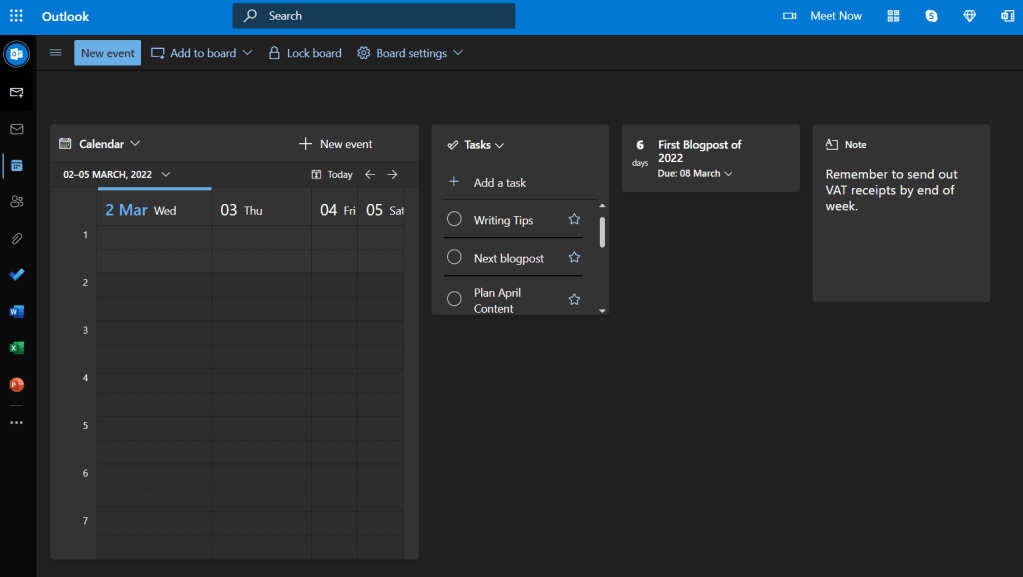
Now that you have your faithful diary/planner by your side, it’s time to set up an online version. For calls, meetings, and tasks, I use my Outlook calendar. If you want to assign tasks and have ‘stricter’ timelines and deadlines, may I suggest:

  • Outlook Live – Everything in one place: emails, calendar, to do list, tasks & notes
  • Asana – a great way to manage tasks and add projects – especially if you work with a team. Basic package is free of charge.
Source: https://asana.com/product/workflow-builder
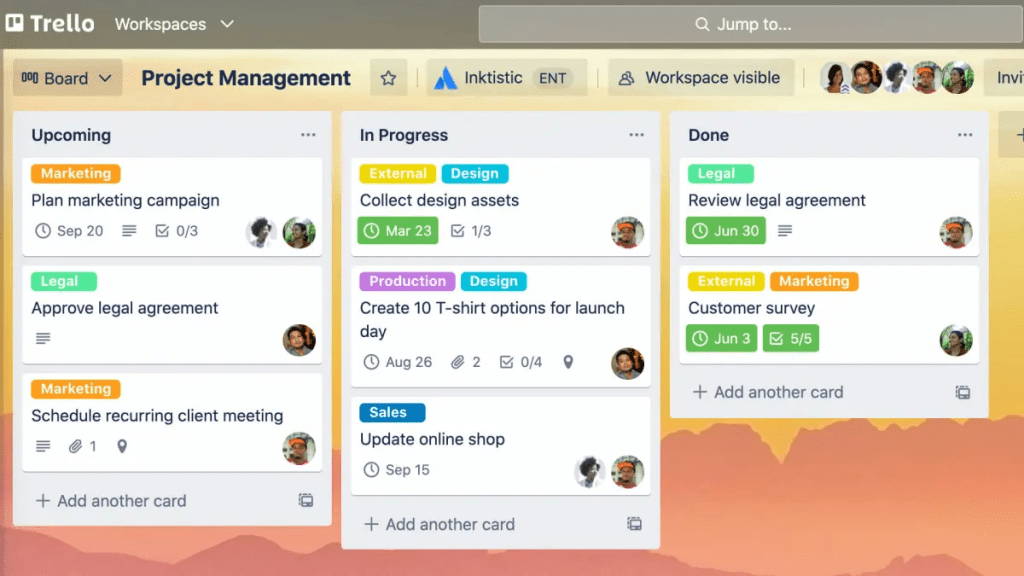
  • Trello – Again, basic package is free of charge. The workspace is easy to use and manage + it’s also customisable.
Source: https://trello.com/guide/trello-101

There are loads of other web-based softwares to keep your tasks in check. A quick google search will uncover the long list of options!

✨ ACCOUNTING SOFTWARE

Zipbooks has been my personal online accountant since the beginning. It’s easy to add expenses along the way, create and issue invoices. You will be able to keep records and transactions in one place.

  • It’s free of charge (for the large part – add ons/other options are at a charge)

Ideally, get in touch with a trusted financial advisor to guide you through the hoops and loops. If, like myself, numbers do not course through your veins, seek professional help. Still, accounting software is super for day-to-day operations.

Source: https://zipbooks.com/accounting/

✨ SOCIAL MEDIA PLANNING TOOLS

You’re running a business, staying on top of accounts, coming up with new product or service ideas, making sure your customers are happy, AND planning posts for social media (SM)? Well, yes and no.

Yes – if you are winding through the roads of self-employment, you will realise (if not already) that you will wear many hats.

No – acknowledge the fact that you do not have to do every single thing yourself and sometimes it helps to have, well, help – from the right people.

If you’re just starting out, outsourcing social media work may seem like a waste of money. I’ll be honest with you – if you know what you’re doing it might as well be. However, when your business picks up (or if it’s not your thing, to begin with), you can then start thinking about having extra hands on board to help with strategy and managing your socials. In the meantime, here are some SM planners that may come in handy:

Buffer – it’s great to start with. The basic package is free of charge and you can add up to 3 social channels (e.g. FB page, IG account & LinkedIn page) including 10 posts per channel.

Source: https://buffer.com/publish

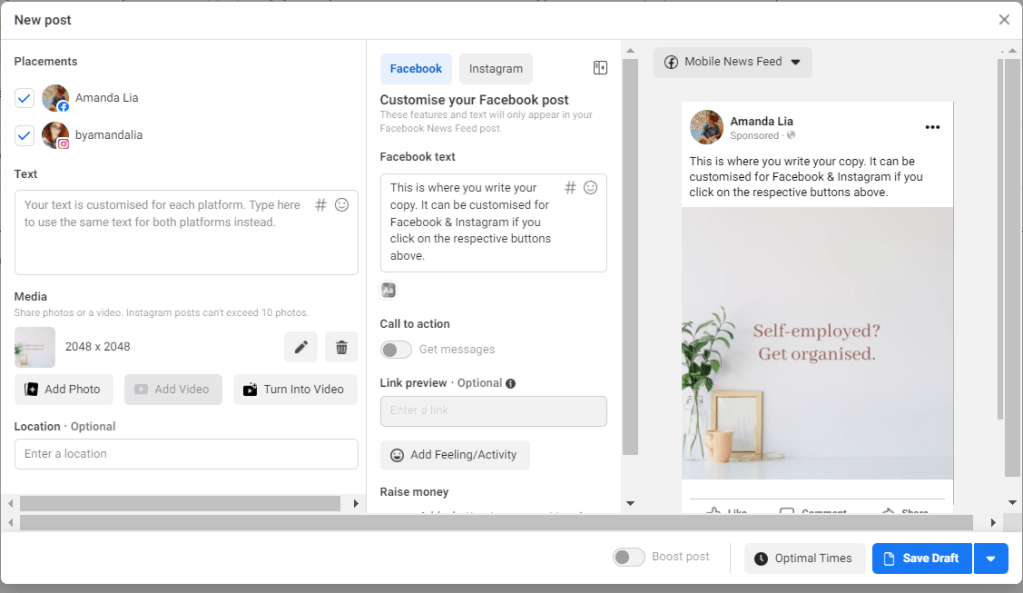
Meta Business Suite – If you want to avoid the hassle of having an external planner like Buffer, this is your go-to planner & scheduler for Facebook & Instagram. It’s easy to use & you can customise your copy easily for one and the other.

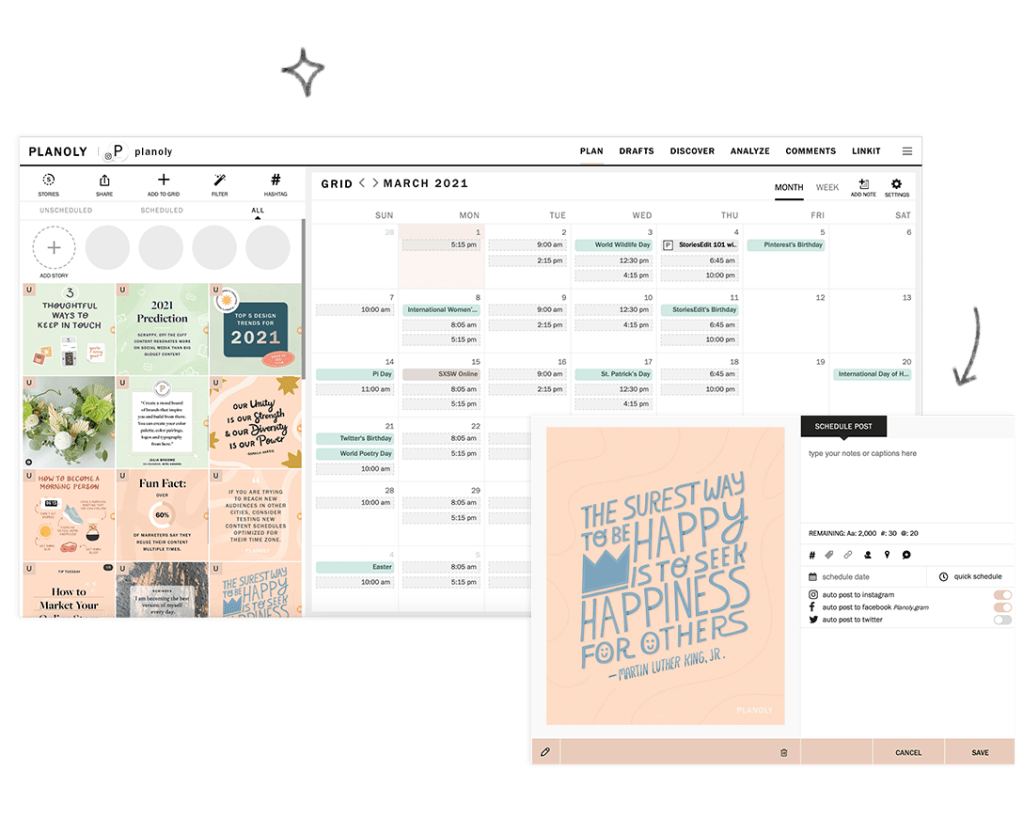
Planoly – for Instagram. This is perfect to visually plan out your grid and schedule posts. Again, the basic is free and then you can have upgrades. With the free package, you can add 2 social profiles (e.g. IG & Pinterest) and have 30 uploads per month, per social.

Source: Planoly | https://pages.planoly.com/about

Mind you, our good old friend excel/sheets, works just fine as well. Edit in a calendar in your sheets and you can map out your timeline there. If you’re working with other team members, simply upload it on a shared drive and you’re good to go!

MORE ON THIS! I’m sharing my self-employed journey on Instagram and will be showing what I find most helpful over there. Feel free to follow for tips & updates!

If you’re starting on your self-employed journey or even if you’re already on board that train, hopefully, you found some of this helpful! If you have any questions or would like me to write about a related topic, don’t be shy – get in touch!

Until next time,

Amanda x

Mobile Marketing: 3 Must-knows

I have a couple of questions for you. Let’s go!

  • Where is your phone right now?
  • Where do you put your phone while you sleep?
  • Do you use your phone to check the time?
  • Do you take your phone to the bathroom with you?
  • Has the time you use your phone increased?
  • Are you reading this on your phone right now?

Hey, relax. This post is NOT about smartphone addiction. I wanted to help you realise (if you haven’t on your own already) that smartphones have become a necessity. We can live without them, mind you. I spent 10 days in Cuba, back in 2018, without any internet connection and it was BLISS. But the fact that I’m even saying that it felt good to not look at my phone for a long time goes to show how much I am on my phone. Sometimes, without even realising it.

What is mobile marketing?

➯ A digital marketing strategy aimed at reaching a target audience on their smartphones, tablets, and/or other mobile devices, via websites, email, SMS and MMS, social media, and apps.

As a business owner, you have to think mobile. You want to hook your audience, engage with them and make a sale.

As a consumer, and an avid smartphone user, you want to browse through aesthetically pleasing shops without a hiccup.

COVID-19 was a setback. It turned our lives upside down. BUT one thing that came out of this, when businesses had to close their doors temporarily, was the realisation that being available online was the only viable option at the time.

Locally, I have seen a rise in e-shops and an improvement in making a customer’s online shopping experience a pleasant one. Still a long way to go but we’re getting there.

How is your mobile marketing doing?

If you can’t answer this, I believe it’s high time you pay a little more attention to mobile.

Everyone (or almost everyone) is on their phones – constantly. We chat, play, work, listen to music, shop, scroll endlessly through TikTok and tap from one story to the next on IG.

3 Must-Knows

To get the hang of mobile marketing, you need more than just three (3) tips, I know – BUT – we need to start from somewhere.

1. WHO ARE YOUR PEOPLE?

Understand your audience. Sure, you’ve heard this a million times. But do you truly know who and where your people are? How do they use their mobile devices?

The most simple thing to do is to ASK. Run a super short survey/poll and ask your already-existing customers short and simple questions. Example:

  • Are you on Instagram?
  • Do you prefer shopping on your phone or desktop?
  • Which devices do you use? (Phone, tablet etc.)

Know who your people are. Listen to online discussions and be present – start a conversation. It’s NOT ENOUGH to just be there. You have to be seen and heard.

2. WRITE FOR MOBILE

It’s not the first time I came across a Facebook post that simply NEVER ends. Your message needs to come across clearly. Being clear and concise is essential. I cannot stress this enough. Even your call to action needs to be clear so that users will be able to understand what to expect.

When it comes to writing for mobile (e.g. online – social media & offline – SMS) avoid writing chunks of paragraphs. This is not an essay. Write short, punchy headlines and straightforward messages, use visuals – make it count!

3. GREAT USER EXPERIENCE

Make it easy for users to navigate through your shop. Having a mobile-friendly website is a must and not an option. Mobile devices call for interaction and users expect a more personalised experience.

You don’t want them to end up frustrated because they’re having trouble with browsing or making a payment. So, make it seamless for users to purchase with a few clicks as possible.

Nowadays, having social media presence is essential for any business. So, BE SOCIAL. Grow your business around a customer experience focused culture.

Think of all the things that bother you as an online user as you browse through other social media accounts and pages, learn from them and avoid repeating their mistakes.

Where is your business at right now?

If you haven’t already, start working on how to build and maximise your mobile presence.

And hey, don’t be afraid of change. It’s good to spice things up. You know, there’s always room for improvement and I’m sure you’ll do great!

Amanda x

Start your business: a guide (part 1)

We have been through a lot of ups and downs this past year. Some of us lost their jobs, some of us changed their jobs and some decided to start out on their own.

I’ve been there back in 2017. The first year (not month) was the toughest. I remember forking out money to set up my website and everything else before I had any income. And when I did have an income, it was only a trickle the first month. But when you successfully land your first client (and you will), I kid you not, it’s one of the best feelings in the world.

Mind you, it never gets easier. If you think that running your own business and being your own boss is a breeze, you’re in for an unpleasant surprise. Add being a parent to the mix whose child is at home due to COVID-19 restrictions, and there you have it.

But, I’m writing this to help you out, not to frighten the living daylights out of you. I’ve always been one to say it as it is; no beating about the bush. Bear with me.

So, now that you are ready to get started, I’d like to give you a helping hand. I didn’t have any guidance when I set foot on this path and always thought it would be nice to have had someone shed light on the road ahead.

OK, let’s cut to the chase. Where do you start?

1. Research, research!

Assuming you know what your products or services you’re going to offer are and that it is the right business venture for you, research first. Make sure there is a market for what you’re offering. Never assume people will buy your product just because YOU (or your family) like it.

  • Who are you selling to? Who are your primary customers?
  • What are their needs, frustrations?
  • How does your product/service help them?
  • Are there any products/services similar to yours?
  • Who is your competition?
  • How will you set yourself apart?

2. Plan it out.

A business without a plan? That’s a no-go. Don’t even think about going there. A business plan can be simple, nothing out of this world, but you need to have one. Specify your objective and map it out. What direction are you planning to take? This will change as your business grows.

Sample Business Plan to help you with writing your own: Samples by Hubspot.

3. Funding.

Service providers, online businesses, brick & mortar businesses – you all need the same thing: funding. The expense may differ depending on the business type but it costs money to start any business.

First you need to determine how much startup funding you will need. I can assure you that you will have bills and invoices to settle way before your business takes flight.

  • Will you self-fund?
  • Will you look for investors?
  • Will you be taking a small loan?

So make sure you put a lot of thought into this because you need this information before you launch. You can even seek (or perhaps it’s better if you do) professional guidance from trusted financial advisors.

  • List the expenses
  • Estimate how much these expenses will cost
  • Draw a full financial picture
  • Use this to calculate your initial fund

What kind of expenses? Equipment, office space, utilities, marketing, salaries, market research, website, communications etc.

  1. Refine your idea
  2. Conduct market research
  3. Check out the competition
  4. Write a Business Plan
  5. Draw a financial map

This is PART 1 of my guide. What will you expect in PART 2?

  • Registrations
  • Location
  • Structure
  • Marketing

Becoming self-occupied or self-employed also mean: paying your own taxes, vat and social security contributions. But we’ll cover that in PART 2 😉

You will probably start small and you will have moments of failure. Learn from them. Don’t toss everything to the side as soon as one thing goes wrong. That’s life, it’s a learning process.

Amanda x

Watch your tone!

Finding your brand voice requires more effort than you think. In my first post discussing tone of voice (TOV), I pointed out how some businesses tend to spend all their energy on perfecting their image and not spare a thought for their voice.

For those of you who missed the intro, you can catch up here 👉#TONEOFVOICE

I understand that not everyone is good with words. I see this everyday, everywhere I go. Both offline and online. That is why a TOV guideline will come in handy for your team. Different people, different manners, different ways of communicating. However, your brand must be consistent on all fronts.

The way your brand logo, colours, and fonts are of significance in recognising your name, so are the words you use and most importantly, how you use them.

Think of your voice as your personality. Your tone reflects that personality and sometimes changes depending on the context.

Source: CoSechedule

Both your tone and voice are about expression. An expression of your company’s values. Here, we’re looking at how and what you write rather than following writing rules per se. Mind you, grammar is just as important. I shudder every time I see desert on a restaurant menu.

Quick tip: revise everything before publishing a message or sending material for printing. Have someone else take a look. A fresh pair of eyes can save the day.

Here’s an example of what you might think is a simple greeting. When you’re representing your brand, which one would you go for?

Or, think about this example below:

A. “Thank you for reaching out.”

B. “Hey, thanks for reaching out 🙂”

Phrase A reads more serious than phrase B. The latter reads more easygoing and fun. Different word choice and use of emojis have set a different tone to the same phrase.

Take a look at these Brand Voice Examples:

Starbucks
Mailchimp
Old Spice

Quick tips

  1. Be straightforward and avoid jargon.
  2. Use the active voice and write positively.
  3. The tone of voice needs to reflect your business objective.
  4. If in doubt, read aloud. Is it too humorous? Too formal? Too sassy?
  5. Write all this down & create a guideline.

Why does it matter?

Your tone of voice is what sets you apart from the rest. It’s what makes you different, unique and relatable. It helps in creating an emotional connection with your customers. This familiarity you create is most likely to lead to loyalty and trust.

That’s why having a brand tone of voice matters.

Need help? Let’s talk.

Amanda x

What #resolution?

“What’s your New Year’s resolution?” – It’s one of the questions I strongly dislike being asked on New Year’s Eve. I usually and politely retort with, “Why wait for the beginning of a new year to get something done?”

I believe that if the time has come for a necessary change, there’s no need to procrastinate. Honestly, there is no better time like the present. Don’t sit and wait around for the beginning of a new year to set goals.

We’re caught up in all the hype (and pressure)  for a limited period of time to stick to our resolutions, only to forget about them the very next day. That’s why the majority of resolutions fail by the end of the month.

Goals and targets shouldn’t be set on a whim. If you do have an objective and would like to make a change in your life, start working towards that goal as from this second. 

That is how I got into entrepreneurship. And it’s been two years already since I left my salaried job. Even if the road ahead is not well-paved, it’s worth to give your dreams a try and make them happen. True, it’s not always possible to mould each dream into reality. But it’s always worth a try, no? How would you know whether it will work or not if you kill the dream from its infancy? 

Till next time,                                                                                                           

Amanda x